
Coastal solar & battery installation
Solar & Battery Installation in Mullaloo
Solar and battery systems designed around your Mullaloo roof, the coastal conditions and the way your household uses electricity.
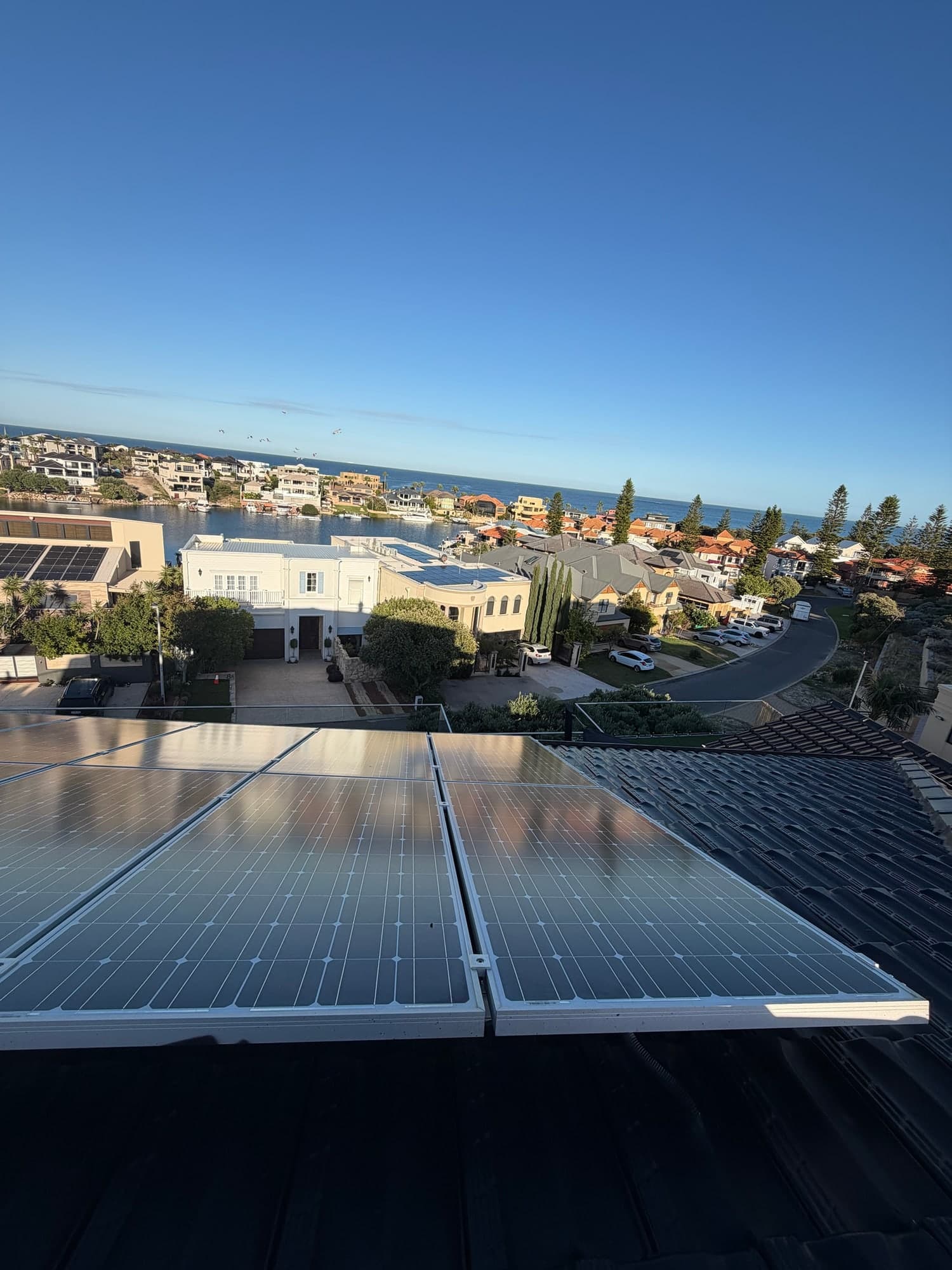
Solar installation
Designed for the roof you actually have.
Mullaloo is an established coastal suburb with homes of many ages and roof shapes, so the best layout is rarely the obvious one. Good design starts with the roof and works out from there.
Roof assessment and layout
Roof faces, orientation, shading and access are reviewed before panels are placed, so the layout suits the property.
Multi-roof designs
Homes with several roof faces can often use more of their available space with a well-planned layout and the right inverter.
Learn more →System sizing
Sized from your usage, your roof and your plans, not from a standard package.
Inverter selection
An inverter chosen to suit the array, the electrical supply and a battery, if you want one now or later.
Coastal-conditions equipment
Sea air accelerates corrosion, so we talk through equipment and fixings suited to the environment.
Upgrades to existing solar
Adding panels or replacing equipment on a system that’s already on your roof.
Learn more →
See also:Solar PV SystemsSolar Health ChecksElectrician in MullalooAreas we service
Battery storage
Using more of your own solar energy.
A battery stores solar your home doesn’t use as it’s generated, so you can use it after the sun goes down. Whether that’s worthwhile comes down to your usage and what you want from the system.
Location and installation
Batteries need the right mounting position, ventilation and clearances. Coastal homes also benefit from considering exposure.
Right-sized capacity
Capacity matched to your evening usage and surplus generation, not the largest battery available.
Solar and battery together
New systems designed together, or storage added to existing solar through a compatible setup.
Switchboard readiness
Older homes may need switchboard work before storage can be connected safely.
Backup expectations
Whether a battery can power your home in an outage depends on the equipment and wiring chosen. We explain what’s possible before you decide.
Why Westcoast
Two founders, two accredited solar installers.
Matthew Wellstead and Mark Porges founded Westcoast Energy, and both hold Solar Accreditation Australia accreditation for PV and battery work. They’re also qualified electrical professionals, so the wiring behind the panels gets the same attention as the panels themselves.
You’ll get recommendations specific to your home, with the trade-offs explained, and no promises about savings.
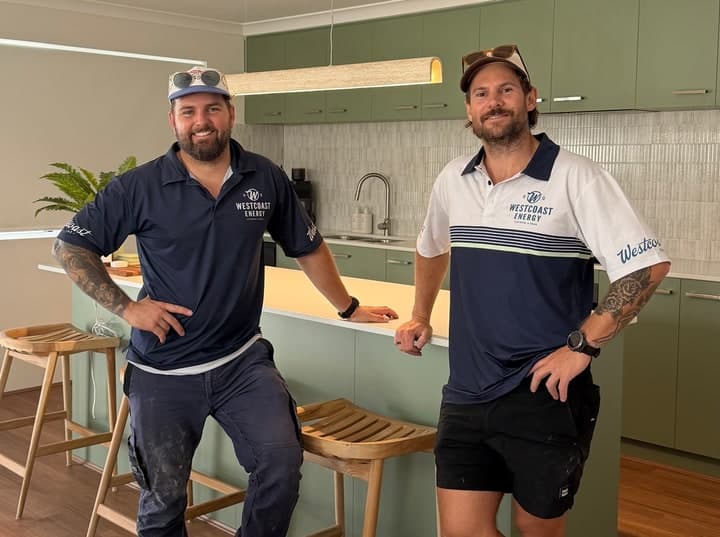
Founder-led business
The directors advise you and are involved in the job.
Solar Accreditation Australia accreditation
Both directors are accredited for PV and battery work.
Personalised recommendations
A design for your roof and your household, with options explained.
Multi-roof installation experience
Including the three-roof-face project shown below.
Electrical expertise
Qualified electricians handling the wiring, isolation and connection.
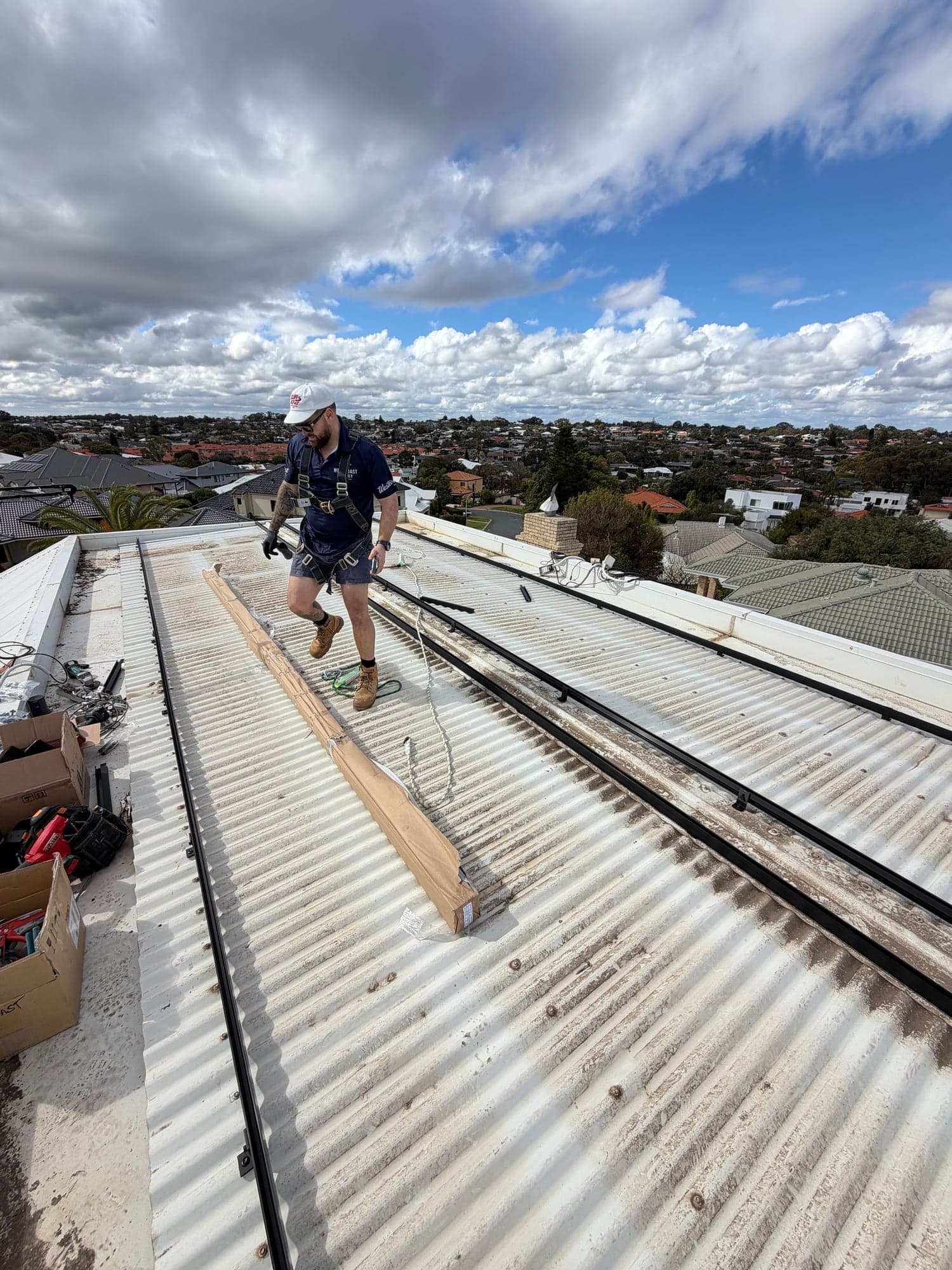
Featured project
Solar across three roof faces.
At a multi-storey home in Kallaroo, we installed 40 panels spread across three separate roof faces, replacing an older 28-panel, 5.32 kW system. The new array is approximately 18.6 kW.
Spreading panels across several faces takes care over layout and wiring. The existing hybrid inverter and battery were retained, and the design worked with them. Capacity describes the array, not what it will generate.
- Location
- Kallaroo, Western Australia
- New solar array
- Approx. 18.6 kW
- Panels
- 40 × AIKO NeoStar 465 W
- Installation
- Three roof faces, multi-storey home
- Existing equipment
- Fox ESS hybrid inverter and approx. 42 kWh battery, retained
Free Home Energy Assessment
Want to know what your roof could support?
Tell us about your home and your electricity use, and the free Home Energy Assessment helps you explore options, with the choice to request a personalised proposal.
How it works
- 1Tell us about your home
- 2See what suits your usage
- 3Talk through next steps with us
FAQs
Coastal solar and roof layout questions
Quick answers to common questions. If yours isn't here, give us a call.
Yes. Many homes use two or three faces. Each face has a different orientation and shading pattern, so the design considers how panels are strung together and which inverter inputs they suit. Our Kallaroo project used three roof faces.
Salt air can accelerate corrosion of mounting hardware, fixings and some electrical equipment. It’s sensible to discuss equipment suited to coastal conditions and to have systems checked periodically.
Panel orientation and tilt, shading, panel and inverter quality, panel condition, dirt and the weather all play a part. We design for your roof and don’t promise a figure.
A hybrid inverter manages solar and a battery together, so it suits households that want or may want storage. A standard inverter suits a solar-only system. We recommend one after reviewing your plans.
Federal incentives for solar and batteries exist, and their rules, amounts and eligibility conditions change, with some depending on your system and installation date. We explain what applies when we prepare your proposal. The Clean Energy Regulator publishes the current requirements.
We review your usage and roof, design and quote a system, then install it once you’ve agreed, subject to network approvals and site conditions. We test and commission it and show you how to monitor it. We confirm timing when we quote.
Yes, if the system is designed for it. Choosing a suitable inverter and leaving capacity on your switchboard makes adding storage simpler.
Ready to explore your options?
Start with the free assessment, or call us to talk through your roof and usage.