
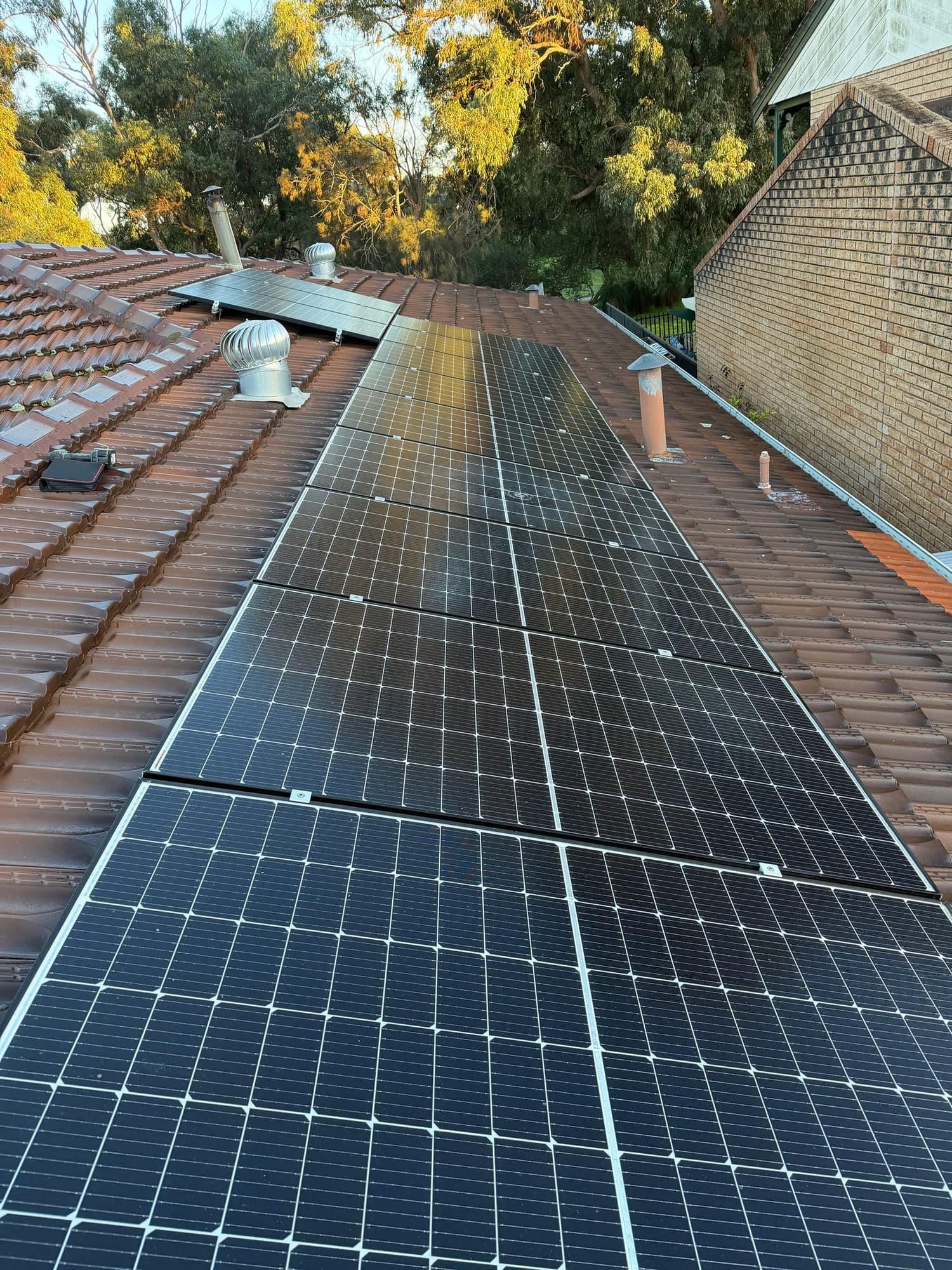
If you're researching solar panels in Perth, you've probably come across the 6.6kW solar system. It has long been one of the most common residential system sizes in Western Australia, and there are good reasons for that.
But is a 6.6kW solar system the right choice for your Perth home? In this guide, we'll break down what a 6.6kW system is, what affects how much it generates, how rebates and network rules apply, and whether it matches your household's needs.
Good to know
This article was updated on 27 October 2026. Rebates, buyback rates and network rules change, so use the official sources linked below to confirm the current position before you decide.
What Is a 6.6kW Solar System?
A 6.6kW solar system typically consists of:
- 16-20 solar panels (depending on panel wattage, usually 330W-415W panels)
- An inverter, most commonly rated at around 5kW for a 6.6kW array
- Mounting hardware and electrical components
The "6.6kW" refers to the total capacity of your solar panels, not to the amount of electricity it will generate. How much you actually get depends on your roof, shading, equipment and the season.
Why Is 6.6kW So Popular in Perth?
There are several reasons why the 6.6kW solar system has become a go-to choice for Perth homeowners:
1. A Good Match for Single-Phase Homes
Most Perth homes have a single-phase connection. For years, Western Power's limit of 5kW for a single-phase inverter meant that a 6.6kW panel array paired with a 5kW inverter was the standard way to get the most from a system while staying inside network limits. The rules changed from 1 May 2026 (see below), but the pairing remains common.
2. A Sensible Balance of Cost and Benefit
A 6.6kW system is large enough to make a meaningful difference to many household electricity bills without paying for capacity a typical home may not be able to use.
3. Perth's Sunshine
Perth is one of the sunniest capital cities in Australia, which suits solar generation. A 6.6kW system can make good use of that sunshine without being oversized for typical household use.
4. Federal Rebates Scale with System Size
The federal Small-scale Renewable Energy Scheme issues Small-scale Technology Certificates (STCs) based on the size of the system, which your installer normally applies as an upfront discount. A 6.6kW system earns more certificates than a smaller one.
How Much Power Does a 6.6kW System Generate in Perth?
Perth's conditions suit solar generation. As a rough guide, a 6.6kW system in Perth generates in the region of 25-30 kWh per day averaged across the year, with more in summer and less in winter. Your own result will differ.
What affects output:
- Panel direction and tilt (north-facing panels at around 30 degrees are generally best for yearly production)
- Shading from trees, chimneys or neighbouring buildings
- The quality and condition of the panels and inverter
- Dust and dirt, and regular maintenance
- Any export limit applied to your system (see below)
New Western Power Rules from 1 May 2026
From 1 May 2026, the rules for new or upgraded solar and battery systems connecting to Perth's main grid (the SWIS) changed:
- Under a standard connection, total inverter capacity (solar and battery inverters combined) can be up to 30 kVA, rather than the previous 5kW single-phase limit.
- New or upgraded systems need either a fixed export limit (1.5kW as the standard setting) or remote export control managed by the electricity retailer.
- Systems installed or upgraded before 1 May 2026 are not affected, and replacing a faulty inverter with a similar one under warranty does not trigger the new requirements.
In practice, this means that the size of the inverter is no longer the main limit for many homes. What your system can export to the grid, and how, is now a bigger consideration. Your installer lodges the application with Western Power and can tell you which settings will apply to your property. Western Power publishes the full technical requirements at westernpower.com.au.
Is a 6.6kW System Right for Your Home?
A 6.6kW solar system is often a good fit if your household:
- Uses a moderate to high amount of electricity
- Check your electricity bill for your daily average usage
- Has daytime energy consumption
- Running aircon during Perth's hot days
- Pool pumps operating in daylight hours
- Home office or appliances used during the day
- Dishwasher and washing machine running while the sun is out
- Wants to cut power bills without a battery (yet)
- A 6.6kW system can offset a good share of your daytime usage
- Excess generation is exported to the grid and credited under Synergy's DEBS buyback
- Planning for a battery later is simple if the system is designed for it
- Has adequate roof space
- A 6.6kW system needs roughly 30 square metres or more of suitable roof area
- North, west, or east-facing roof sections work well in Perth
When You Might Need a Larger System
Consider a larger system, such as 10kW or 13kW, if you:
- Have high energy consumption
- Run energy-intensive equipment (large pools, workshop tools, home-based business)
- Plan to add an EV charger or electric vehicle
- Have three-phase power
- Want to install a battery system and need excess generation
When a Smaller System Might Work
A 3kW or 4kW system could suffice if you:
- Live alone or with one other person
- Have low energy consumption
- Rent and want a smaller upfront investment
- Have limited suitable roof space
What Does a 6.6kW Solar System Cost in Perth?
Prices vary a lot between quotes, because they depend on the equipment chosen, your roof and electrical work, and the value of the STC discount on the day of installation. We don't publish a price range here. The best approach is to ask for an itemised quote that lists the panels, inverter, installation and the STC discount separately.
What's Included
- Solar panels
- Inverter
- Mounting system
- Electrical work and connection
- Western Power application
- Installation by accredited installers
- Warranty registration
What Affects the Price
- Panel brand and quality
- Inverter brand and type (a hybrid inverter costs more but is battery-ready)
- Roof complexity (single vs double storey, tile vs tin)
- Electrical upgrades needed (switchboard capacity, cabling)
- Installation difficulty (access, height, safety requirements)
Rebates and Incentives for 6.6kW Systems
Perth homeowners can benefit from several incentives. The details below are a summary, so check the official sources before you rely on them.
1. Small-scale Technology Certificates (STCs)
- A federal incentive, normally applied as an upfront discount by your installer
- The value depends on the size of the system, your location and the installation date
- The number of certificates reduces each year until the scheme ends in 2030, so waiting reduces the discount
2. Distributed Energy Buyback Scheme (DEBS)
- Synergy's buyback for excess solar exported to the grid
- The rate is higher in the evening peak (about 10 cents per kWh for exports between 3pm and 9pm) and lower at other times (around 2 cents per kWh)
- Synergy sets the rates and they can change, so check Synergy's current DEBS schedule
3. Battery Incentives (If Adding Battery Storage)
- WA Residential Battery Scheme: for Synergy customers, a rebate of $130 per kWh of battery capacity up to 10 kWh (a maximum of $1,300), plus an interest-free loan of up to $10,000 for households that meet the income requirement. The battery must be connected to a virtual power plant, and eligibility conditions apply. See Energy Policy WA for the current rules
- Federal Cheaper Home Batteries Program: a discount on eligible batteries delivered through STCs. The rules changed on 1 May 2026, and the amount now depends on battery size
Getting the Most from Your 6.6kW System in Perth
1. Choose the Right Panel Orientation
- North-facing: Best for overall yearly production
- West-facing: Often chosen in Perth because afternoon generation lines up with the DEBS evening peak rate
- East-facing: Good morning production
Avoid: South-facing panels produce significantly less
Many Perth homes now install split arrays (for example north and west) to capture both midday generation and afternoon exports.
2. Time Your Energy Usage
Using more of your own solar while it is generating helps you get the most from your system:
- Run pool pumps in the afternoon
- Charge EVs during high-generation hours
- Use dishwashers and washing machines during the day
- Consider adding a battery to store excess for evening use
3. Keep Panels Clean
Dust and dirt can reduce how much your panels generate, particularly after dry, dusty periods. Check your panels regularly and clean them as recommended by the manufacturer.
4. Monitor Your System
Most modern inverters include monitoring apps. Track your generation to ensure your system performs as expected and catch issues early. If your inverter stops working, our solar inverter troubleshooting checklist walks you through what to check safely.
5. Consider a Future Battery
Even if you're not installing a battery now, ask about a "battery-ready" or hybrid-capable inverter. This can make a future upgrade simpler.
Common Questions About 6.6kW Solar Systems in Perth
Can I install a bigger system than 6.6kW?
Often, yes. Since 1 May 2026, new systems on Perth's main grid can have more total inverter capacity than the old 5kW single-phase limit, but they need an export limit or remote export control. What is possible at your property depends on your connection and network requirements, and your installer can confirm this with Western Power.
Will a 6.6kW system eliminate my electricity bill?
Unlikely. Most households still draw grid power at night and on cloudy days, and there are usually fixed supply charges on the bill. A battery can reduce how much grid power you draw in the evening.
How long until my system pays for itself?
There is no single answer, so we don't quote a typical payback period. It depends on:
- Your electricity consumption and tariff
- The cost of the system after the STC discount
- How much solar you use yourself rather than export
- Buyback rates, which can change
A good installer can estimate your payback from your own bills and usage.
Do I need to upgrade my switchboard?
It depends on your current switchboard capacity and age. Many homes need upgrades to safely accommodate solar. A licensed electrician should assess this before installation.
What about maintenance?
Solar systems are low-maintenance. Expect to:
- Keep panels reasonably clean
- Check system performance regularly via your monitoring app
- Have the system inspected by a professional from time to time
- Plan for an inverter replacement at some point, as inverters generally wear out before panels do
Choosing a Solar Installer in Perth
With dozens of solar companies operating in Perth, choose carefully:
Look for
- Solar Accreditation Australia (SAA) accreditation
- An electrical contractor licence (WA)
- Clear warranties on workmanship and equipment
- Transparent pricing with itemised quotes
- Positive reviews on SolarQuotes, Google, ProductReview
- Local presence and after-sales support
- Experience with Western Power applications
Red flags
- Pressure sales tactics or "sign today" discounts
- Unusually cheap quotes (check what equipment and warranty are included)
- Vague warranty terms
- Won't provide references
Beyond Solar Panels: Complete Energy Solutions
A 6.6kW solar system is often just the start of your energy plans. Consider these complementary services:
Switchboard Upgrades
If your switchboard is outdated, you may need an upgrade before solar installation. This supports safety and compliance with current Australian Standards.
EV Charger Installation
Planning to buy an electric vehicle? Installing an EV charger alongside your solar system lets you charge your car with your own solar power during the day.
Battery Storage
Add a battery system to store excess solar energy for evening use. Incentives are available, but eligibility conditions and funding limits apply, so check the current rules before you commit.
Is a 6.6kW Solar System Right for You?
For many Perth households, a 6.6kW solar system is a sensible size. It can make a meaningful difference to electricity bills, suits many single-phase homes, and makes good use of Perth's sunshine.
The 6.6kW system is often a good fit if you:
- Have average household energy consumption
- Own a single-phase home (most Perth properties)
- Want a good balance of cost and benefit
- Have suitable north, east, or west-facing roof space
- Want to leave room for a battery later
Consider alternatives if you:
- Have very low usage → a smaller system
- Have high consumption or three-phase power → a larger system
- Already have a battery or plan immediate installation → a larger system
Ready to Go Solar in Perth?
A well-designed solar system can reduce your power bills and prepare your home for future energy needs such as a battery or an EV.
Next Steps
- Check your recent electricity bills to confirm your daily usage
- Assess your roof space and orientation
- Get quotes from 3-4 reputable Perth solar installers
- Compare system specifications, not just prices
- Verify installer credentials and warranties
Get a 6.6kW Solar Quote
Westcoast Energy designs and installs solar systems across Perth. We'll look at your property and your usage, give you honest recommendations, and provide a clear quote.
Westcoast Energy is a founder-led electrical and solar business in Perth's northern suburbs, run by Matthew Wellstead and Mark Porges, who are both qualified electrical professionals with Solar Accreditation Australia accreditation for PV and battery work. Our services include solar panel installation, switchboard upgrades, EV charger installation and solar health checks.
Phone 0429 346 088 · Email hello@westcoastenergy.com.au
Sources to check for current information: Western Power, Synergy, Energy Policy WA and the Clean Energy Regulator.